

What Is an AI TV? Features, Benefits and Whether You Need One

What Is an AI TV? Features, Benefits and Whether You Need One
Reviewed by Senheng Home Entertainment Team | Last updated: July 2026
Walk into any TV showroom in Malaysia today and you’ll spot the term “AI TV” plastered across almost every box. But here’s the thing — AI TV isn’t a separate category like OLED or QLED. It’s really about the smarts (software and processors) working quietly behind the screen to make your viewing better, automatically.
What Is an AI TV?
Simply put, an AI-enabled TV uses built-in processors and software to adjust picture, sound, and settings on its own — without you fiddling through menus. Every brand names this differently, whether it’s the AI upscaling on the Samsung 65″ OLED S90H Vision AI 4K Smart TV, the AI Processor on the LG 55″ OLED AI B6 4K Smart TV, or the Cognitive Processor XR inside the Sony 65″ BRAVIA 8 XR OLED 4K Google TV — but the goal is the same: a smarter, more effortless watching experience.
Key Features of AI-Enabled TVs
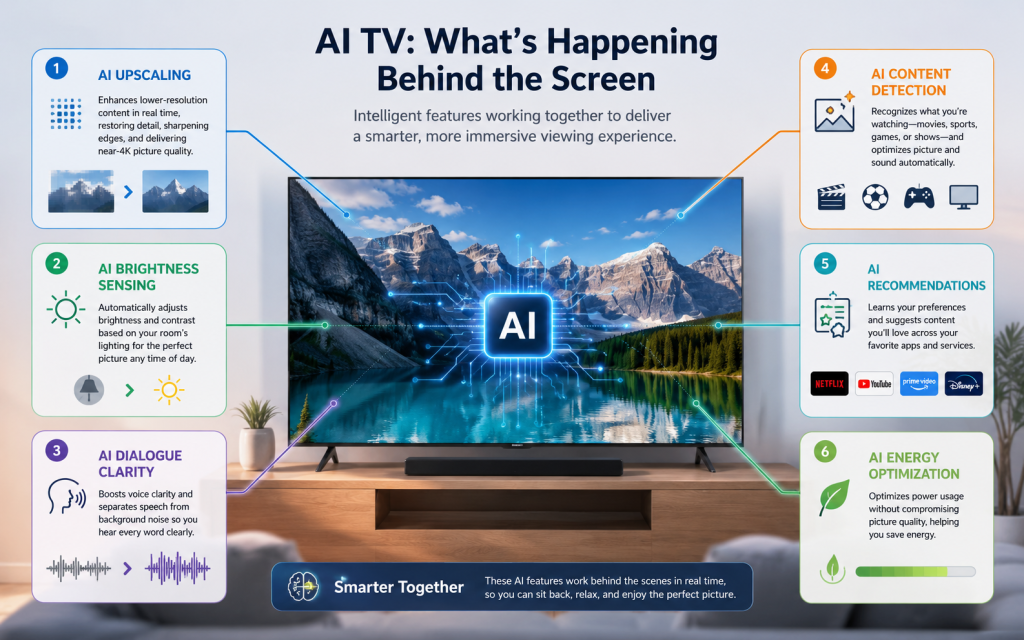
- Upscale older or lower-resolution videos to near-4K sharpness
- Adjust brightness based on your room lighting
- Sharpen dialogue clarity, even with background noise
- Detect whether you’re watching a movie, sports, or gaming
- Recommend shows based on your habits
- Optimise energy use and improve voice-control response
Mini-LED models like the Hisense 65″ U6SE Mini-LED 4K VIDAA Smart TV apply these same AI principles to backlight zoning, giving deeper contrast without the OLED price tag.
AI TV vs Regular Smart TV: What’s the Difference?
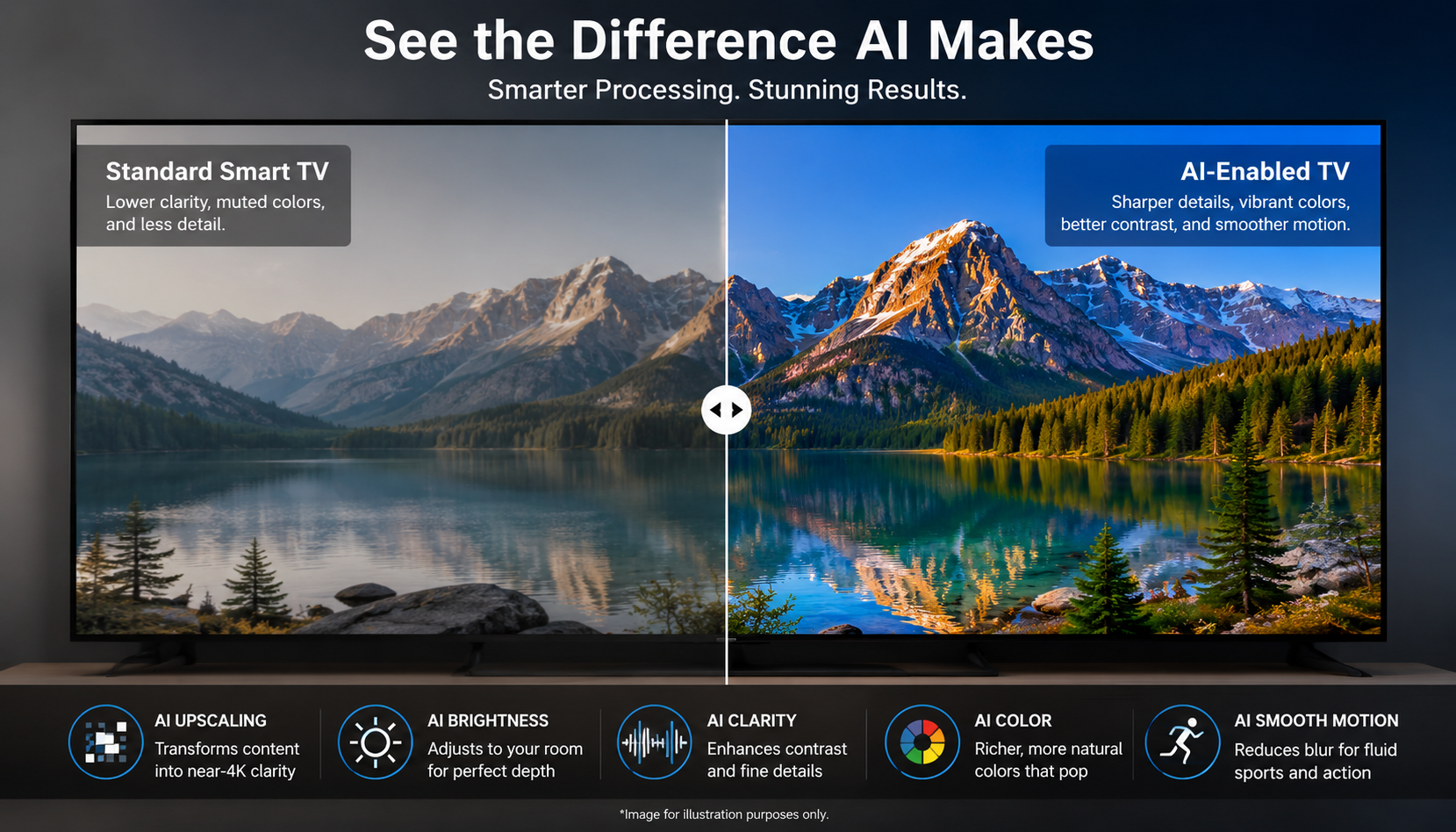
| Feature | Standard Smart TV | AI-Enabled TV |
| Streaming apps | Yes | Yes |
| Voice control | Sometimes | Common |
| Auto picture adjustment | Basic | Advanced |
| Content recognition | Limited | Common |
| AI upscaling | Not always | Common in premium models |
Who Should Consider an AI TV?
If your family watches everything from Astro replays to YouTube clips to gaming, or you’re thinking about going big with a 65-inch and above screen for the living room, AI-driven picture and sound tuning genuinely makes a difference — especially in bright Malaysian living rooms. For larger households or open-concept spaces, you might even want to browse 85-inch Mini-LED TV options where AI motion and contrast optimisation matters even more.
Is an AI TV Worth the Extra Cost?
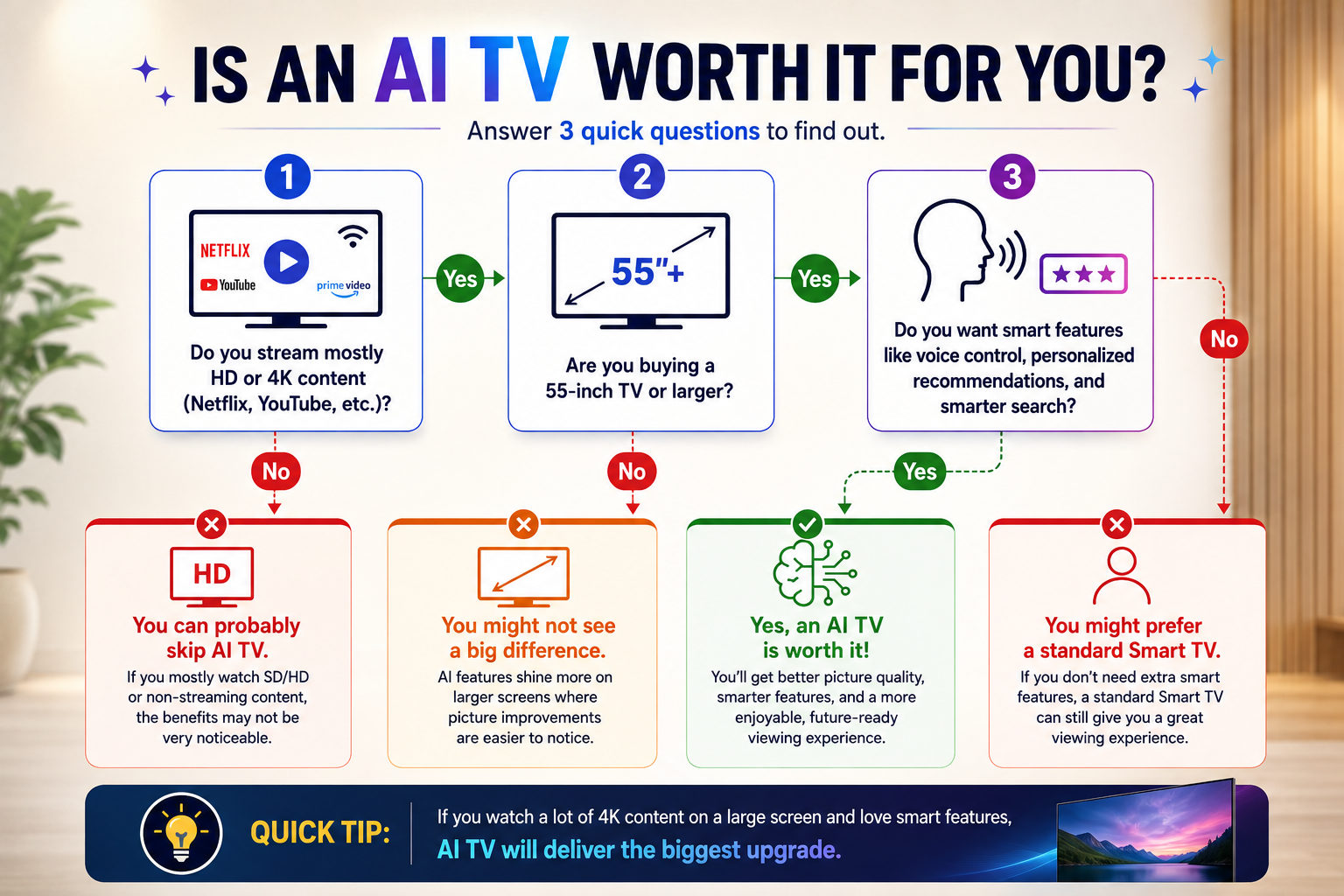
If you mainly stream one platform in HD and rarely touch settings, you may not need to pay extra just for the “AI” label. As always, features vary by model, so it’s worth comparing specs rather than assuming AI always means better results. That said, if you’re already upgrading to a larger or higher-resolution screen, the added AI processing often comes bundled in at a smaller price gap than you’d expect — so it’s worth checking specs side by side before ruling it out.
Quick Buying Checklist
Panel type, screen size, refresh rate, HDMI ports, operating system, warranty, and installation needs — tick these off before you decide.
Curious how AI picture optimisation actually looks in real life? Compare AI-enabled models online or drop by a Senheng outlet to see the difference for yourself.
Final Thoughts: Is an AI TV Right for You?
An AI TV can make everyday viewing more enjoyable by automatically optimising picture quality, sound, brightness and content settings with less manual adjustment. While you don’t necessarily need an AI TV if you mainly watch basic HD content, it can be a worthwhile upgrade if you’re buying a larger screen, watching a mix of streaming, sports and gaming, or want a more convenient viewing experience. Before making your choice, compare the processor, display technology, refresh rate, connectivity, operating system and warranty to find the AI TV that best fits your viewing habits, room and budget.
FAQs
- What is an AI TV? A TV that uses built-in AI to automatically enhance picture, sound, and content settings.
- Does every smart TV have AI? No — AI features vary by brand and model, and are more common in mid-to-premium ranges.
- Can an AI TV improve normal HD videos? Yes, through upscaling, though results depend on the processor.
- Does an AI TV use more electricity? Not necessarily. Many AI TVs actually include energy-optimisation features that adjust brightness and power draw based on content and room lighting, which can offset the processing overhead.
- What is the price difference between a Smart TV and an AI TV? It varies widely by brand and screen size, but the gap has narrowed as AI processors become standard in more mid-range models. Comparing similar screen sizes side by side is the best way to see the real difference.
- Does an AI TV need internet access? For features like content recommendations and voice assistants, yes; basic AI picture processing works offline too.